Norowz Legend
A Glance to Iranians Believes about New Year; Norowz
Norowz Legend
Tradition of grating Norowz in the civilized land of Iran has had many delicacies and it has until now. Cleaning the house from A to Z is one of the most famous of them; at first mess and at the end arrangement. Whole of house is become rummage and for being clean, even in some regions of Iran painting the walls of house was tradition too and of they couldn’t, they painted at least the room which Haft-Sin was spread there. They threw away old things and buy new ones instead. Breaking a pit which they believe that that is the place of dirty things and one-year sufferings was necessary. They gave copper dishes to whitesmiths, whitened silvers, cleaned the dusts of houses, washed the carpets, and they believed hat the souls of dead people will be happy if they come back to their homes and see them clean, so they will pray for their descendants. Otherwise, they will return unhappy and depressed. Because of this, few days to Norowz, they burned musk and amber at homes and lightened candles.

In some regions of Iran women traditionally cooked the best food and besprinkled it on the graves in the last Friday of the year, also a day before Norowz they went to the house who they had a dead one in last year and they told them that we prayed for your late and said him/her happy new year.
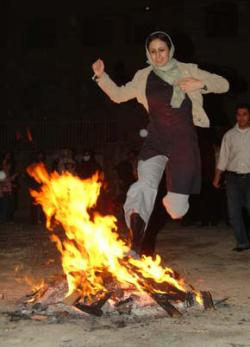
Chahar Shanbeh Suri (Čahār Šanbé Sūrī - usually pronounced Čāršambé-sūrī)
In the evening, people set branches in 7 or 3 one (as the symbol of Good Deed, Good Thought, Good Behavior) and when the sunset became complete, they set fire with this aim that this big fire be replaced of the sun. In some regions of Iran, people burned un-useful old things like blankets, old dresses or coverlet. The fire could be set in deserts, sideways, streets, yards, or roofs. When the fire became big, they jumped over it and sang the songs which all of them were full of the best wishes like wealth, healthy, fertility, and cleanness. They didn’t dumb the fire and let it become ash itself. Then after, someone gathered the ash which was holy thing and without looking backward, poured it at the first crossroad. Falling-Shawl is one of the rites of Chahar Shanbeh Suri. After fire ceremony, young people went to the roofs of their neighbors and fell the long shawl to the stovepipe. The landlord must be put a gift in the shawl.
Translated by Somayyeh Qazizadeh
Previous articles:
Roudaki; Father of Persian Poetry
Registering Persian Gulf in UNESCO
A city full of Color and Music
The First Flourishing Base of Farsi Language
Rite of Religious Kettledrum Beating in Nayin
Ghazal music in IRAN and north east of Asia
The Role of Armenians in Persian Music
The music of Boushehr and the Greek
Nowruz celebration with Persian colorful music
Two instruments which stand for the Persian Gulf
The Especial Instrument for Iranian Ceremonies
The gem of the Persian music ring passed away
Innovative Iranian musical instruments
 Hooshang Samani